It’s Not Your Equipment, It’s Your Opener
I get messages all the time from podcasters convinced their show isn’t growing because their audio isn’t crisp enough or their intro music isn’t punchy enough. They’ve spent weeks agonizing over a pop filter. Meanwhile, their guest interviews fall flat in the first ninety seconds, and nobody’s talking about that.
Here’s the uncomfortable truth: most interview episodes lose their energy before the guest even finishes their first answer. And it almost always traces back to one question. You know the one.
“So, Tell Us About Yourself”
It feels safe. It feels polite. It gives your guest the floor right away, which seems generous. But think about what you’re actually asking someone to do. You’re handing them a blank page and asking them to summarize their entire career, background, and relevance in real time, with no direction from you at all.
Most guests respond the only way they can: with a rehearsed, generic bio they’ve recited a hundred times before. It’s the answer they give at networking events and on other podcasts. It’s not wrong, but it’s not interesting either, and it sets a flat, informational tone right out of the gate instead of a conversational one.
Your listener’s attention is most fragile in those opening minutes. They’re deciding, often without realizing it, whether this episode is worth their next thirty minutes. A generic bio dump is not going to convince them.

What to Ask Instead
The fix isn’t complicated, but it does require a little more thought than firing off the default question. You want your opener to do three things: show you’ve actually prepared, give your guest something specific to react to, and invite a story rather than a summary.
- Ask about a moment, not a career. Instead of “tell us about yourself,” try something like “what was the moment you realized this was going to become your actual job, not just a side project?” That’s a story, not a resume.
- Reference something specific. Mention a recent project, a comment they made somewhere else, or a detail from your own research. It signals you did your homework, and it narrows the question enough that they can’t fall back on autopilot.
- Ask a question only they can answer. Generic questions get generic answers. A specific question, even a small one, forces a specific response, and specific responses are what make interviews memorable.
None of this requires elaborate preparation. Even five minutes of looking at a guest’s recent work can give you enough material to replace the throwaway opener with something that actually earns a real answer.
Give Your Guest an Easy Way to Be Interesting
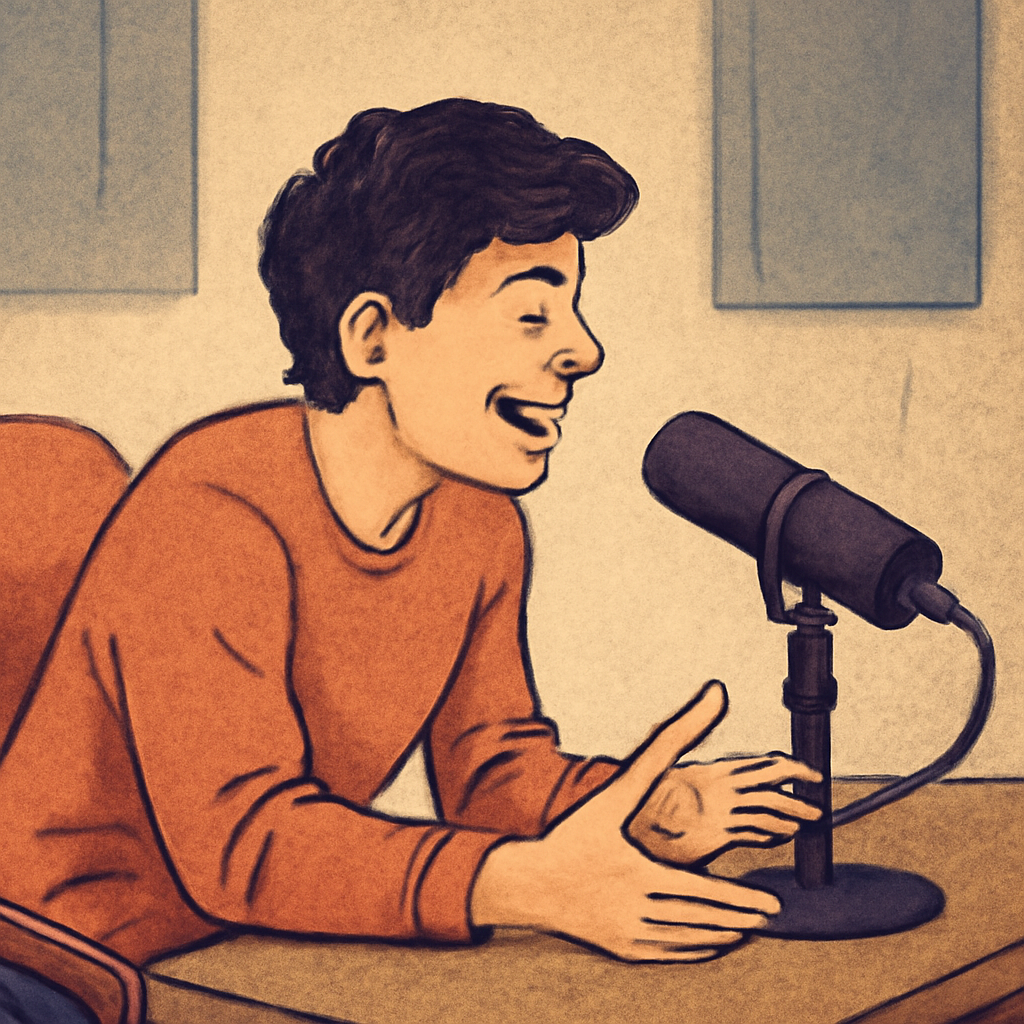
Here’s something worth remembering: most guests want to give good answers. They’re not trying to be boring. They simply default to safe, rehearsed language when the question doesn’t give them anything else to work with. Your job as the host isn’t just to ask questions, it’s to ask questions that make it easy for someone to be their most interesting self.
That’s a mindset shift more than a scripting trick. Instead of thinking “what should I ask next,” think “what question would make this person lean forward instead of settling back into their usual talking points.” Sometimes that means asking about a failure instead of a success. Sometimes it means asking “what do people usually get wrong about what you do” instead of “what do you do.”
A Quick Pre-Interview Habit
If you want a simple system rather than relying on inspiration in the moment, try this before every recording:
- Write down the one thing you genuinely want to know from this guest, the thing you’d ask even if nobody was recording.
- Build your opening question around that curiosity instead of a generic warm-up.
- Keep a short note of something specific and recent from their work to reference in the first two minutes.
This takes maybe ten minutes of prep, and it pays off far more than another round of audio tweaking. Good sound quality makes an episode listenable. A strong opening question is what makes it worth listening to.
The Bigger Lesson
It’s tempting to believe that growth problems are always technical problems, because technical problems feel solvable with the right gear or the right settings. But conversational craft matters just as much, maybe more, especially in a format built entirely around conversation.
Retire the blank-page opener. Replace it with a question that respects your guest’s time and your listener’s attention. It’s a small change, but it’s the kind that compounds, episode after episode, into a show people actually look forward to.