The question every new podcaster asks me
I get this one constantly: “Toni, how long should my episodes be?” People want a number. Twenty-two minutes. Forty-five minutes. An hour. Something they can write on a sticky note and never think about again.
I get why. Starting a podcast involves a hundred small decisions, and it’s tempting to want at least one of them handed to you fully formed. But episode length isn’t one of those things. It depends on your format, your content, and honestly, your audience’s listening habits. The good news is you can figure this out with a little intention instead of just copying whatever the biggest show in your niche does.
Why “just copy the top show” doesn’t work
A lot of beginners look at a massive three-hour interview podcast and think that’s the standard to hit. It’s not. That show has years of audience trust built up, a specific format built around long-form conversation, and listeners who’ve chosen to commit that kind of time on purpose.
Your show might be a tight news-style briefing, a solo storytelling series, or a quick tips show people listen to during a short commute. None of those need to look like a three-hour interview marathon, and trying to force that length onto a different format usually just means padding with filler. Filler is the enemy here. Listeners can feel it.
Start with the content, not the clock
Instead of picking a target length first, try this: record an episode the way it naturally wants to be told, then look at how long it ended up. If your solo episode covering one specific tip runs twelve minutes and feels complete, that’s your length for that format. If your interview episode needs forty minutes to let a guest actually breathe and go deep, that’s fine too.
The real question isn’t “how long is my episode” — it’s “did I say everything worth saying and nothing that wasn’t.” A focused fifteen-minute episode almost always beats a rambling forty-minute one.
Match length to format
That said, some general patterns can help you set expectations as you plan your show:
- Solo tip or advice episodes: Often work well shorter, since you’re delivering focused value without needing back-and-forth conversation to fill time.
- Interview shows: Naturally run longer because you need time for rapport, follow-up questions, and letting your guest’s answers unfold.
- Narrative or storytelling podcasts: Length depends entirely on the story arc. Some chapters are short, some need room to build tension.
- News or roundup style shows: Usually benefit from staying tight and punchy, since listeners expect efficiency over exploration.
Notice none of these have exact numbers attached. That’s on purpose. Use them as a general shape, not a rulebook.
Think about when people are listening
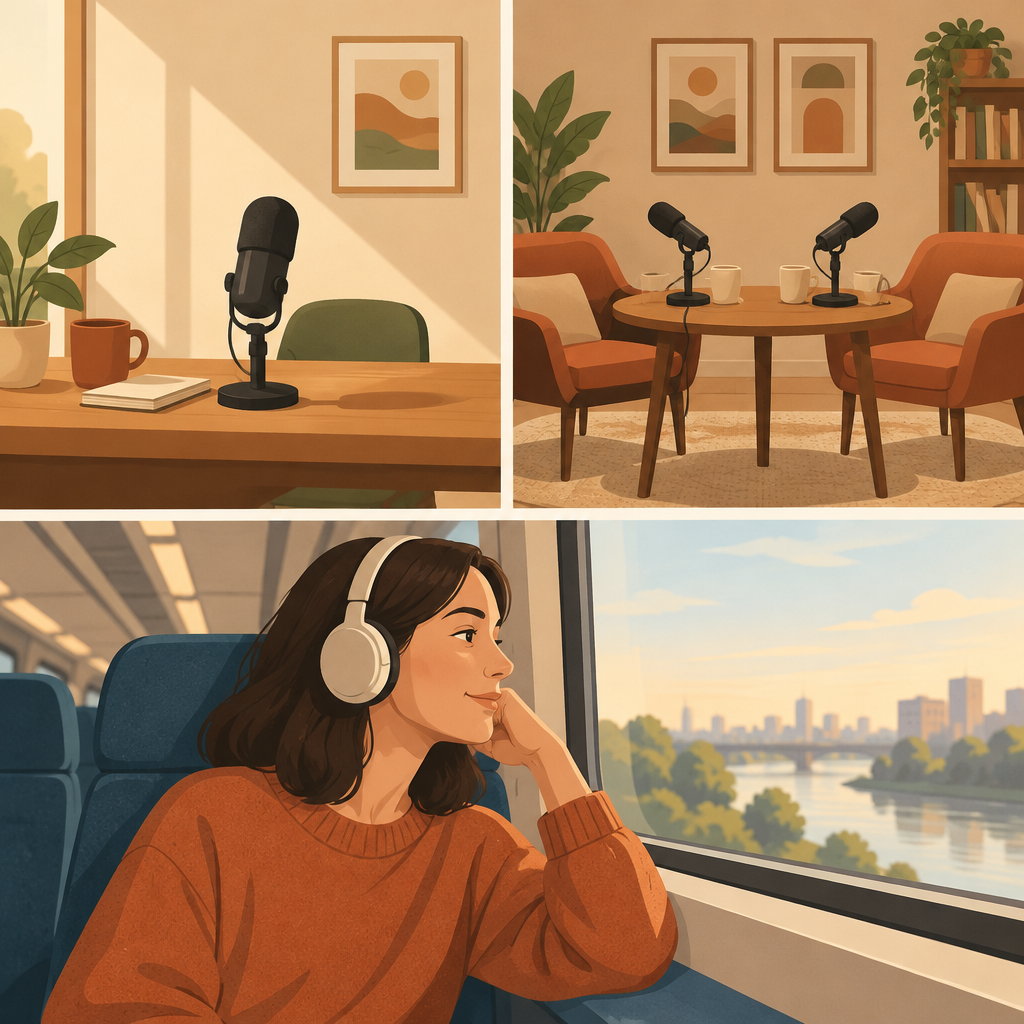
Here’s something beginners often overlook: context matters as much as content. Think about the moment your ideal listener actually presses play. Are they commuting? Doing chores? Winding down before bed? Taking a walk?
A show meant for a quick commute benefits from episodes that wrap up cleanly in that window. A show meant for long walks or weekend drives has more room to stretch out. You’re not just making content, you’re fitting into someone’s day, and that’s worth thinking about just as much as your topic.

Consistency matters more than exact length
One thing I’ll push back on hard: obsessing over hitting an exact runtime every single week. Your listeners don’t need every episode to be identical in length. What they do need is a consistent feel — knowing roughly what kind of experience they’re signing up for when they hit play.
If your show tends to run in a general range, say short episodes most weeks with an occasional longer deep-dive, that’s totally fine as long as it’s intentional and clearly communicated, maybe even in your episode titles or descriptions. Surprises are fine. Confusion isn’t.
A simple way to test your instincts
If you’re still unsure, try this exercise for your next few episodes. Record as usual, then before you edit, ask yourself honestly: where did my attention start to drift while listening back? That’s usually your sign of where an episode runs too long for its own content.
On the flip side, if you finish listening back and feel like something was left unexplored or rushed, that’s a sign the episode could have used more room. Trust that instinct. It gets sharper the more episodes you produce.
The bottom line
There’s no universal perfect length, and anyone who tells you otherwise is selling you a shortcut that doesn’t exist. What matters is matching your runtime to your format, respecting your listener’s time and context, and staying consistent enough that people know what to expect from you.
Stop chasing a number you saw in someone else’s success story. Build the episode your content actually needs, trim what doesn’t earn its place, and let your show’s natural rhythm emerge over time. That’s how you end up with a length that feels right instead of one that just feels borrowed.